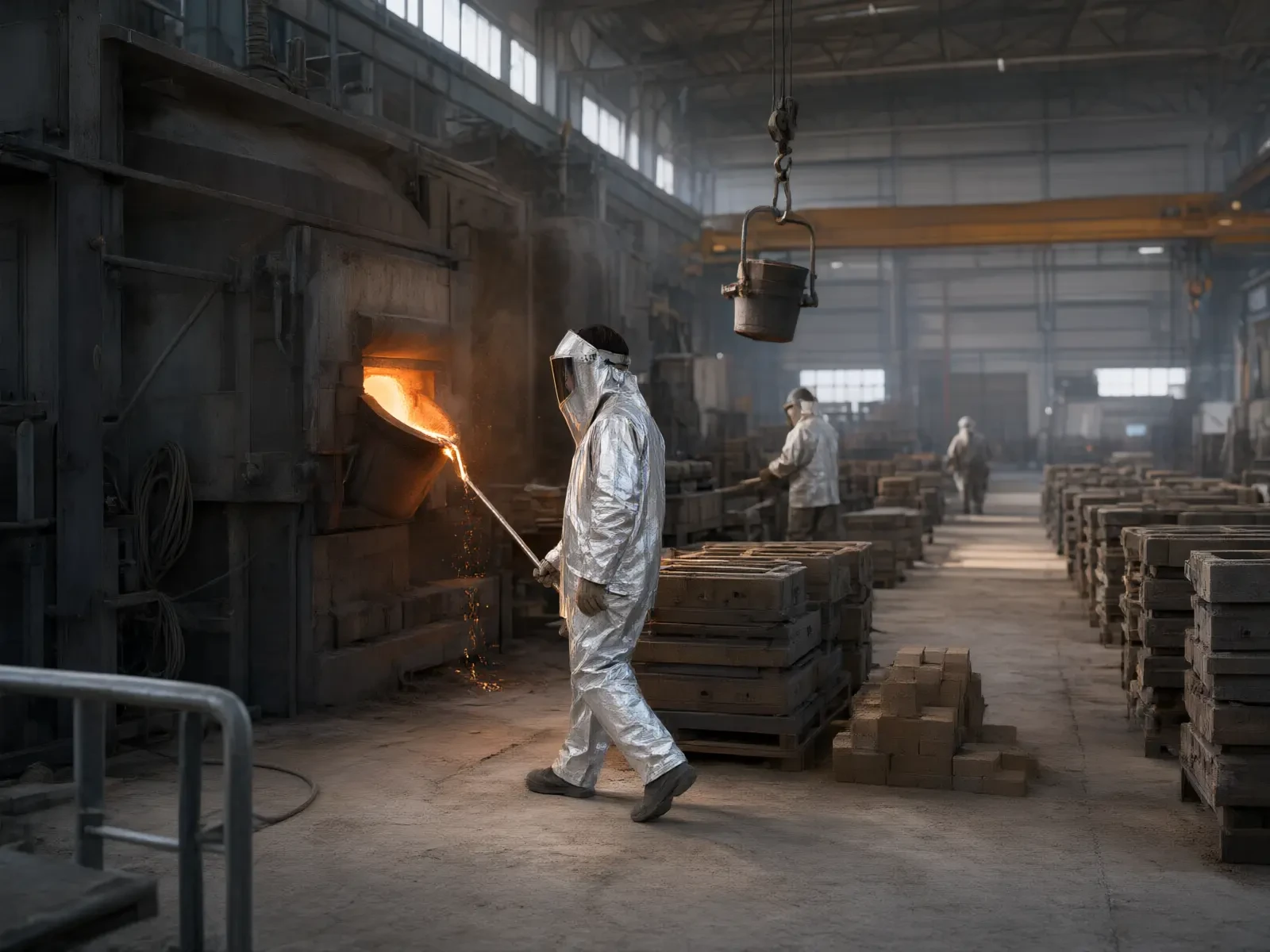
In a foundry, the time between tapping molten iron and pouring it into molds is extremely short. Even slight deviations in carbon or silicon content from the specified grade can result in parts that are too hard to machine, or defects like shrinkage and porosity. By the time lab results are available, the entire melt has already been poured.
This is why more and more foundries are installing carbon-silicon analyzers—also known as thermal analyzers or molten iron quality management systems—at the furnace for quality control. However, the market offers a wide range of price points and configurations; specifications may appear similar at first glance, while each foundry's operating conditions differ. The following five questions serve as a reference guide when engaging with suppliers.
1. Is the goal speed or quantization accuracy?
The value of the pre-furnace analyzer lies in delivering results while molten iron is waiting to be poured. It operates on thermal analysis: a small sample of molten iron is taken after melting and placed into a mold cup. The device records the cooling curve during solidification, then calculates equivalent carbon (CE), carbon percentage (C%), and silicon percentage (Si%) using key points such as liquidus temperature, solidus temperature, and undercooling. For the CYY-LK series, the analysis time per sample is approximately 2 to 3 minutes, matching furnace pouring cycles.
Spectrometers and chemical analysis instruments in laboratories offer superior elemental coverage and quantitative accuracy, but sample preparation and measurement typically take tens of minutes. These two equipment groups are not interchangeable; they operate sequentially: rapid testing furnaces determine process adjustments, while laboratory instruments confirm results and maintain records.
Therefore, if the goal is to adjust composition before pouring, a pre-tap thermal analyzer is the appropriate choice. If the goal is a full composition report for material records, that falls within the scope of laboratory equipment.
2. Do the material and measurement range match the current cast iron grade being produced?
This is often overlooked and can lead to selecting the wrong device.
Pre-melting thermal analyzer for molten iron prior to pouring, suitable for gray cast iron, ductile iron, white cast iron, and malleable iron. For molten steel or high-alloy cast iron, confirm compatibility directly with the supplier; do not assume the device is suitable.
The CYY-LK model's published measurement range is: active equivalent carbon (CE) from 2,60 to 4,80 percent, active carbon (C) from 2,30 to 4,20 percent, and active silicon (Si) from 0,60 to 3,80 percent. In practice, create a table of the composition for the running iron grades and compare each grade against this range. If the composition typically falls near the center of the range, the operational safety margin will be wider.
A common question from international buyers is about the user interface. On LK series models, three core parameters—carbon content, silicon content, and equivalent carbon—are displayed clearly and directly on the screen. Some models may include a small portion of Chinese characters in menus or sub-labels, but this does not affect the readability of the key parameters.
For ductile iron foundries, the nodularization ratio is a key parameter. The device calculates this value based on eutectic degree and undercooling, provided active magnesium content is sufficient. Use these results as a reference for furnace adjustments; they do not replace laboratory metallographic testing.
3. Which configuration best fits the furnace location and actual operations?
The area in front of the furnace has high temperatures, limited space, and multiple observers. Input method, screen size, and anti-interference capability directly affect whether the device is used consistently. The CYY-LK series offers various configuration options to suit different locations.
CYY-LK3 uses an Omron temperature controller, featuring an isolation transformer and power protection designs for noise suppression and surge protection. This configuration is ideal for applications requiring specific component brands and stable power supply performance.
CYY-LK4 features a localized configuration with a 15-inch screen and front tempered glass to prevent molten metal splashes. It offers fast response times and adjustable reference functions, making it ideal for workshops that prioritize rapid response and investment budget control.
CYY-LK5 features a 17-inch touchscreen, designed for low mounting in front of the oven to enable direct on-screen operation without a mouse. The device supports automatic analysis and data history logging, with two rear USB ports for connecting a mouse, keyboard, or other peripherals—simplifying parameter setup and data management.
CYY-LK7 is the export-grade model with a 15-inch English interface. It measures CE, C%, Si%, Mn%, and carbon growth ratio, plus includes tensile strength and hardness reference functions. Ideal for factories with English-speaking experts or technical documentation.
All CYY carbon-silicon analyzers and molten metal temperature measurement devices carry CE certification. When selecting a configuration, base your decision on the specific process control needs and operator workflow: choose LK5 for large displays, touch operation, and data logging; LK3 for stable power supply and branded components; LK4 for fast response times and budget constraints; or LK7 if exporting to international markets or working with foreign technicians.
In addition to composition, pouring temperature is a critical variable to control. CYY's molten metal temperature measurement line includes the handheld CYY-W330 (measuring range from 0 to 2000 °C depending on thermocouple type), the large-screen CYY-W600, and the wireless CYY-W660. These are used to monitor the temperature of molten iron and steel prior to pouring.
4. Is the data saved and retrievable?
Previously, many sites simply recorded the current reading by hand. When retrieving data by batch or verifying raw material changes, a device that only displays instantaneous results lacks a basis for reverse lookup. Automatic storage, curve review, and data export capabilities preserve a record of each measurement; on the LK5, historical data is automatically stored and can be exported via the USB port.
When working with suppliers, ask directly about three key points: where the data is stored, whether it can be exported, and if batch-based retrieval is supported.
5. Has the supplier been with you for many years?
Pre-furnace equipment is a daily operational tool, not a display unit. Operating costs stem from consumables such as sample cups and thermocouples, periodic calibration, and downtime during troubleshooting. Even with suitable specifications, slow delivery of consumables can disrupt production schedules.
Nanjing Changyouyi Analytical Instrument (CYY) was founded in 2014 and manufactures analytical and temperature measurement equipment for the metallurgy and casting industries. Our pre-furnace carbon-silicon analyzer series includes LK2, LK3, LK4, LK5, and LK7 with varying configuration levels, complemented by molten metal temperature measurement devices and consumables. These products are trusted by customers in multiple international markets. When evaluating a supplier, please clarify their supply lead time, calibration procedures, warranty period, and the language used for technical documentation.
Conclusion: Choose in three steps
Pre-furnace carbon-silicon analyzers are not a panacea for all ductile iron quality issues. Their role is to provide quantitative data prior to pouring, replacing reliance on visual flame observation and experience alone.
Selecting the right equipment involves three key steps: first, match the measurement range to current production steel grades; second, configure based on furnace location, operational workflow, and data logging requirements; third, assess long-term parts availability and technical support. Specifications are fixed; production conditions vary.
To ensure consistent quality, combine pre-oven quick checks, lab confirmation tests, and process parameter standardization. The pre-oven equipment is the first link in this chain.
If your foundry is considering adding a carbon-silicon analyzer or a molten metal temperature measurement device, please provide the cast iron grade you produce, furnace capacity, and operating conditions. We will recommend the optimal configuration and provide a quote.